Drawing on my academic background in psychology and extensive experience in both clinical and organizational settings, I design and deliver psychology-informed programs that support employees’ well-being, resilience, and professional development.
I work with organizations to develop tailored training programs, workshops, and consulting services addressing a range of workplace needs, including psychological well-being, mental health and resilience, stress management, team dynamics, and healthy workplace relationships. I also provide project-based workplace psychologist services for organizations seeking ongoing or short-term psychological support for their employees.
My approach combines psychological knowledge with practical workplace experience, with each program tailored to the organization’s goals, work environment, and target audience. Training and workshops can be delivered in English or Turkish, either online or in person.
Below are some examples of workshop topics and support groups that I frequently offer. All content can be customized according to your organization’s specific needs. For further information or to discuss a potential collaboration, you can reach me at sibelkaramaras@gmail.com.
Workshops
MANAGING STRESS EFFECTIVELY
Stress is an evolutionary process that helps us function and respond to challenges. At the same time, in today’s fast-paced world, it can have a significant impact on both our physical and psychological well-being. This training helps participants understand what stress is, how it affects us, and how it is connected to our lifestyle, habits, and patterns of thinking. Participants will also explore practical ways to reduce the impact of stress and develop healthier ways of responding to it.
WELLBEING IN DIFFCULT TIMES
Challenges are a natural part of life and can sometimes disrupt our emotional balance. Psychological resilience does not mean never being shaken by difficult experiences; rather, it is the ability to find our way back to balance when we are. In this training, we explore resilience as the capacity to recognize our emotions, understand our needs, draw on our personal resources, and regain our sense of balance. We will learn how to navigate in life with awareness and flexibility.
LIVING WITH UNCERTAINTY
For minds accustomed to routines and predictability, uncertainty can often feel like a threat. As our work and personal lives continue to change rapidly, we encounter uncertainty more frequently, which can contribute to anxiety, stress, and difficulty making decisions. In this training, participants will explore common thought and behavior patterns that emerge during uncertain times and learn practical exercises to manage anxiety, strengthen psychological flexibility, and develop healthier ways of coping with uncertainty.
UNDERSTANDING IMPOSTER SYNDROME
Imposter syndrome can show up as thoughts such as “I’m not good enough,” “I only succeeded because of luck” or “People think I’m more capable than I really am.” These feelings can become particularly pronounced during periods of transition, such as starting a new role or a new work environment. This training explores different thinking patterns associated with it and introduces practical strategies for building self-confidence and developing a more balanced and realistic view of our abilities and achievements.
THE POWER OF SELF-COMPASSION
The way we talk to ourselves and treat ourselves during difficult times can have a significant impact on our overall well-being. Self-compassion is the ability to respond to ourselves with greater kindness, understanding, and support when we make mistakes or face difficulties. In this training, participants will explore the three key components of self-compassion, examine common misconceptions and barriers, and learn how our thoughts can shape anxiety and self-criticism. The session also includes short, practical self-compassion exercises that can be incorporated into everyday life.
DISCOVERING COURAGE
Our understanding of courage begins to take shape in childhood, and we often associate courage with heroic or extraordinary acts. Yet courage can also be found in many ordinary moments of everyday life. In this training, participants are invited to reflect on their own definitions of courage and explore how courage can mean being willing to learn, being authentic, speaking honestly or sharing our mistakes. By broadening our understanding of courage, we can become more aware of the courageous choices we already make and approach future decisions and challenges.
Support Groups
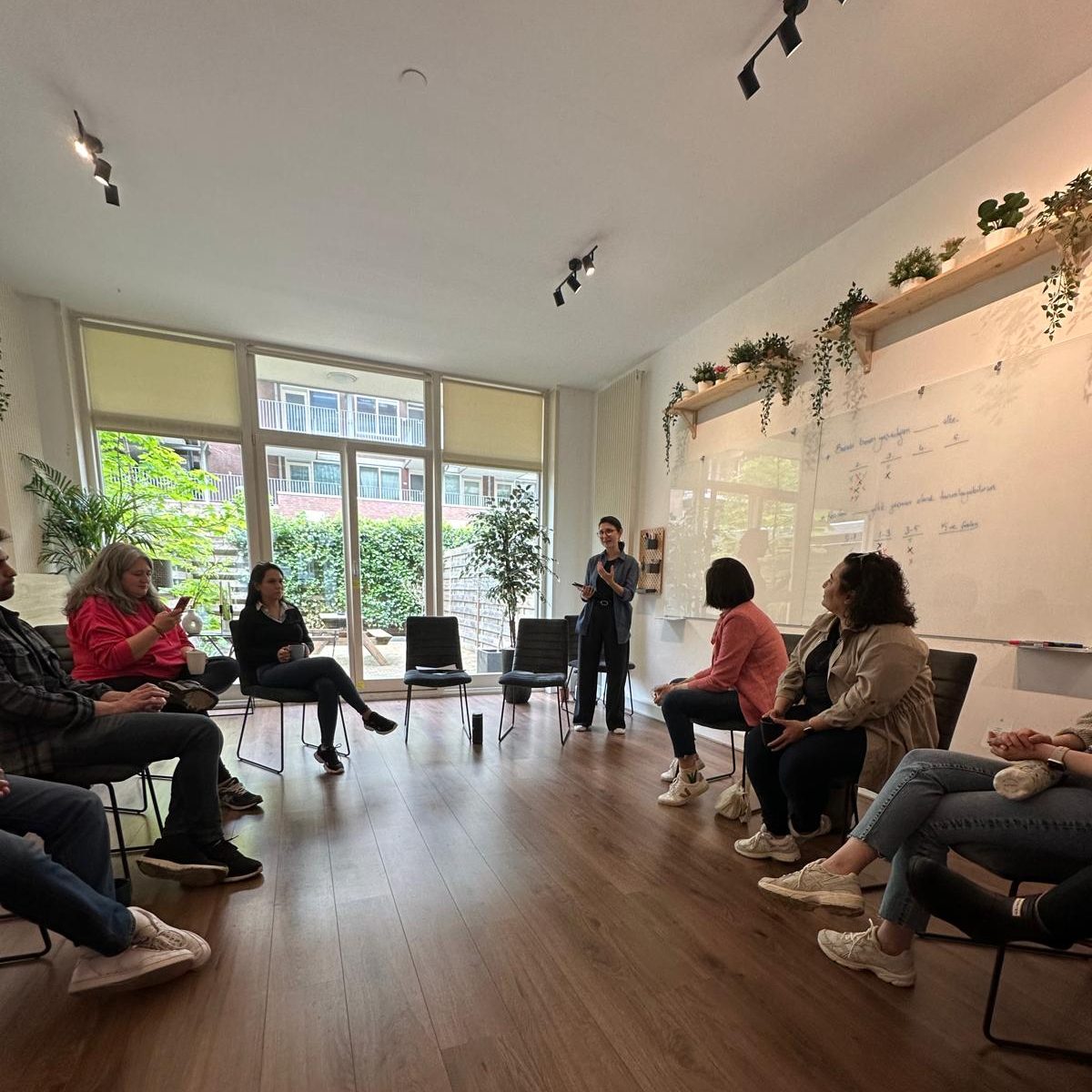
Support groups bring together 8–12 participants in a safe and supportive environment where people can share experiences, reflect on challenges, and find connection and strength in a group setting.
Groups can be offered as single sessions or as a short series over a defined period. Each group is shaped around the participants’ needs, experiences, and interests, creating space for reflection, connection, and practical support. Some possible themes include:
LIFE IN A NEW COUNTRY
Exploring the psychological challenges of adapting to life in a new country, including cultural adjustment, identity, belonging and communication.
MANAGING EVERYDAY STRESS
Sharing practical tools, small daily practices, and personal experiences that can help reduce stress and support emotional well-being in everyday life.